Real Estate Speed to Lead: Why a 5-Minute Reply Wins Deals
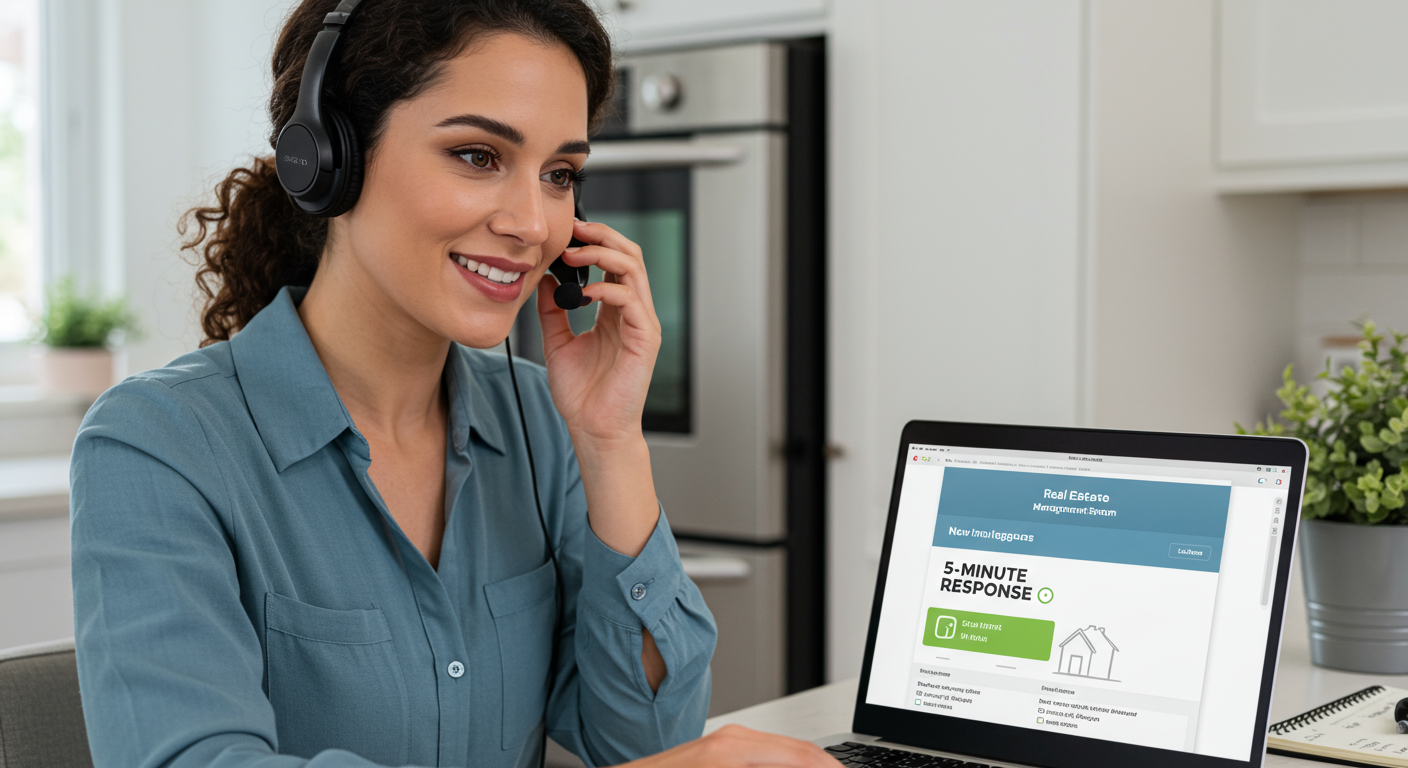
That 8 PM Zillow lead just hit your inbox. You are at a family dinner. By the time you see it an hour later, that lead is already talking to three other agents. You lost the race before you even knew it started. This is the reality of real estate speed to lead. It is not just a metric. It is the single most important factor in converting online inquiries into closed deals. Speed to lead is the response-time discipline that determines whether you capture or lose an inbound inquiry within the first five minutes.
The cost of delay is not theoretical. It is a direct loss of income. The Lead Response Management Study, originally conducted by Dr. James Oldroyd at MIT and popularized by Harvard Business Review, established the hard numbers. Waiting just 30 minutes to respond to a lead decreases your odds of qualifying them by 21 times. Wait an hour, and the lead is effectively gone. Yet, many agents still take hours or even a full day to reply. In that time, a competitor has already answered the lead’s question and booked a showing.
The Five-Minute Mandate
Understand the five-minute rule. It is not a friendly guideline. It is a mandate for survival in the online lead generation game. Leads from Zillow, Realtor.com, and Facebook Ads have zero patience. They click a button and expect an immediate conversation. If you do not provide it, they click the next button on the next agent’s profile. This is the new standard of consumer expectation.
This is not a failure of effort. You cannot be available 24/7. You need to sleep, eat, and show properties. The problem is a mismatch of tools. You have leads pouring in from multiple sources. You try to manage them with a system designed for a different era. Your calendar is packed, and your inbox is a disaster zone. The result is lost opportunity. Good leads go cold because you were busy serving existing clients.
Your real estate speed to lead performance dictates your income ceiling. Improving your real estate lead response time is the highest-leverage activity you can focus on. Shaving hours off your response time is good. Getting it under five minutes is better. Getting it under 60 seconds is how you dominate your market. This requires a system, not just more effort. It requires a shift from manual work to an autopilot pipeline.
How Instant Response Works
Put your lead response on autopilot. An AI assistant connects directly to your lead sources. It sees every new inquiry the second it arrives. This includes your Gmail, SMS, and WhatsApp channels. The assistant does not just receive the notification. It reads and understands the context of the lead’s message.
The assistant then drafts a personalized, contextual reply. It asks the right qualifying questions. "Are you working with an agent?" "Are you pre-approved?" "When are you looking to move?" It does this instantly, day or night. The lead receives a helpful, relevant message in under 60 seconds. You are no longer racing the clock. The assistant handles the first contact for you.
You remain in full control. You can see every conversation in a single thread. You can jump in at any time. The assistant is designed to handle the initial engagement and qualification. Its goal is to book a qualified appointment on your calendar. You take over for the high-value work: the showing, the negotiation, the closing. This approach is not a replacement for you. It is a force multiplier that lets you focus on what you do best.
Key Benefits of Instant Lead Response
Win more deals. That is the primary benefit. By being the first to respond, you capture the lead’s attention. You become their primary point of contact before competitors even know the lead exists. This dramatically increases your conversion rate from sources like Homes.com and your own IDX website. A faster response directly translates to more commissions.
Reclaim your time. Stop monitoring your phone at all hours. Let the AI handle the initial follow-up. According to industry reports, many agents spend over 10 hours a week just chasing new leads. An autopilot system gives those hours back. You can spend that time showing more homes, crafting better offers, or simply being with your family. Your business runs even when you are not actively working in it.
Build a predictable pipeline. Sporadic follow-up creates a feast-or-famine business. An instant response system creates consistency. Every lead gets the same level of professional, immediate service. This builds a robust sales pipeline that is not dependent on your personal energy levels. You can forecast your business more accurately. Your Autopilot Score shows you exactly how much of your pipeline is running without manual effort.
Getting Started with Autopilot Follow-Up
Begin by connecting your lead sources. Start with your primary email account, typically Gmail. The assistant needs to see new lead notifications as they arrive. Then connect your business phone number for SMS and your WhatsApp account. This gives you complete coverage across the three main communication channels. The setup should take less than 10 minutes. No IT support is needed.
Next, sync your calendar. The assistant needs to know your availability to book showings and calls. It will check your schedule in real time to avoid double-bookings. It proposes times to the lead that work for you. Once the lead confirms, the event is automatically added to your calendar. You receive a notification. The entire scheduling back-and-forth is eliminated.
Finally, review and refine. At first, you might watch every conversation. Soon, you will trust the system to handle the initial steps. Traditional CRMs like Follow Up Boss, kvCORE, and BoomTown organize contacts; Agentype acts on them. Your job shifts from doing the admin work to managing the outcomes. You are the CEO of your business, not the secretary.
It is important to note where this approach is not a good fit. If your business is based purely on a handful of high-net-worth referrals per year, this level of automation might be overkill. For agents handling consistent inbound lead flow, however, it is essential.
FAQ
What is real estate speed to lead?
Speed to lead measures how quickly you respond to an inbound client inquiry. In real estate, the industry benchmark is five minutes. Failing to meet this standard significantly reduces the chance of converting the lead into a client, as they will likely move on to a more responsive agent.Will my clients know they are talking to an AI?
Yes, and that is a good thing. Best practice is for the assistant to introduce itself early in the conversation, like "Hi, this is Alex, the AI assistant for [Your Name]." This transparency builds trust and sets clear expectations. You always have full visibility and can take over the chat at any point.How does this handle TCPA consent and legal compliance?
You are responsible for following your state's consent regulations, like TCPA. Ensure your lead capture forms (on Zillow, your website, etc.) include clear language that the person agrees to be contacted via phone and text. The assistant acts on your behalf based on that initial consent. It is a tool to execute your follow-up strategy, not a substitute for legal compliance.What happens if the AI cannot answer a question?
The system is designed to be conservative. If it encounters a complex or ambiguous question it cannot confidently answer, it will not guess. Instead, it will notify you immediately and suggest you step in to reply directly. This ensures no client question goes unanswered and you maintain control over difficult conversations.Next Steps
- Connect your Gmail. Free. No credit card.
- Sync your calendar to automate showing requests.
- Watch the assistant reply to your next lead in seconds.